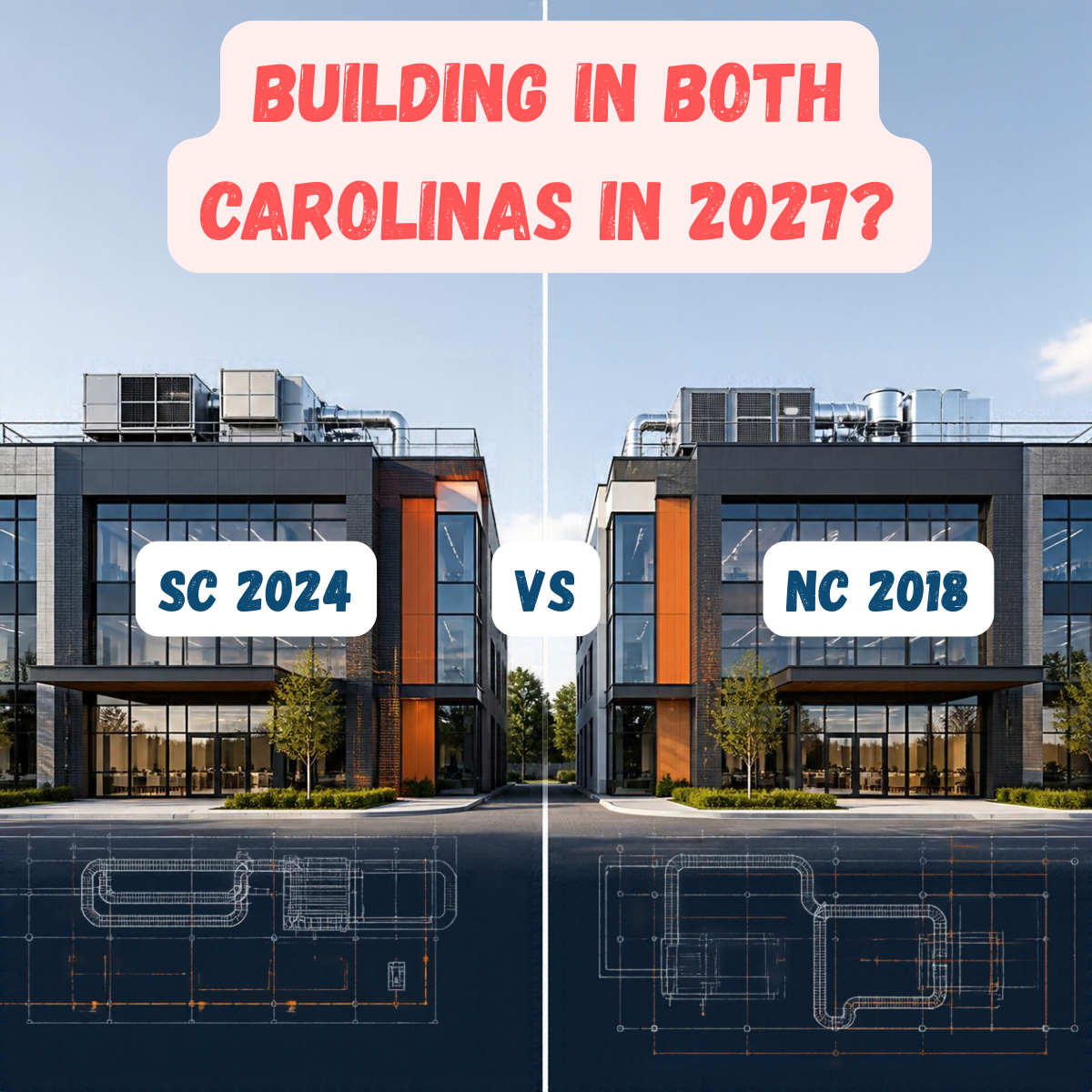
Building in Both Carolinas in 2027? Your HVAC Assumptions May Need a Reset.
Picture two similar commercial projects: one in Charlotte, one across the state line. The team carries over the HVAC concept, bid scope, and details that worked on the last job.
Before those assumptions become purchase orders, there’s a question to settle:
What design basis applies to each project?
South Carolina will implement the 2024 International Mechanical Code with state modifications on January 1, 2027. South Carolina Building Codes Council
North Carolina currently enforces the 2018 North Carolina Mechanical Code, based on the 2015 IMC, with state amendments. Implementation of its 2024 State Building Code remains delayed; approved 2024 rules may also be used through the state’s interim process. Treat the NC basis for a 2027 project as something to confirm, rather than a fixed forecast. NC Mechanical Code Amendments, NC OSFM Transition Guidance
What this can mean for the project?
Similar buildings may need different design decisions. Where the engineer identifies a project-specific difference, it can affect equipment selections, space requirements, trade interfaces, or installation details.
The exposure grows when pricing, procurement, and coordination move ahead on assumptions the design team has not resolved. A later revision can mean revised quotes, another submittal cycle, changed rough-in, or rework.
Repeat projects create confidence. Standard details, familiar equipment packages, and previous subcontractor scopes become the starting point.
Meanwhile, estimating, design, and purchasing may be working from different document revisions. A code edition on the cover sheet alone does not tell the team whether a pending design decision has been carried into the bid scope.
Four practical controls for you:
- Document the project basis. Have the responsible design professional confirm the applicable edition, state modifications, and permit transition requirements with the local building department.
- Make open decisions visible at bid time. Ask the engineer which unresolved items could affect equipment, layout, or trade scope. Identify pricing assumptions and assign each decision an owner and due date.
- Tie buyout to current design information. Before releasing equipment, identify pending selections or substitutions that could change the order. Record who must resolve them.
- Carry revisions through to the field. When the design changes, update affected quotes, submittals, coordination drawings, and installation plans. Close the loop before rough-in or fabrication.
Your Key takeaway
For work across both Carolinas, make the project’s confirmed design basis visible in scope, purchasing, and field documents.
The earlier you check your assumptions, the clearer is your project.
Share your thoughts, or explore our free HVAC audit and turn your assumptions into facts
FOR FREE -> [FREE Detail Review]